How to Choose a Commercial Painting Contractor in the Twin Cities
How to choose a commercial painting contractor in the Twin Cities — the vetting checklist.
- Vetting checklist for Twin Cities commercial painting
- What to ask, what to require, what to walk away from
- Applies to offices, retail, multi-tenant, and restaurants
- No sales pitch — a buyer’s checklist
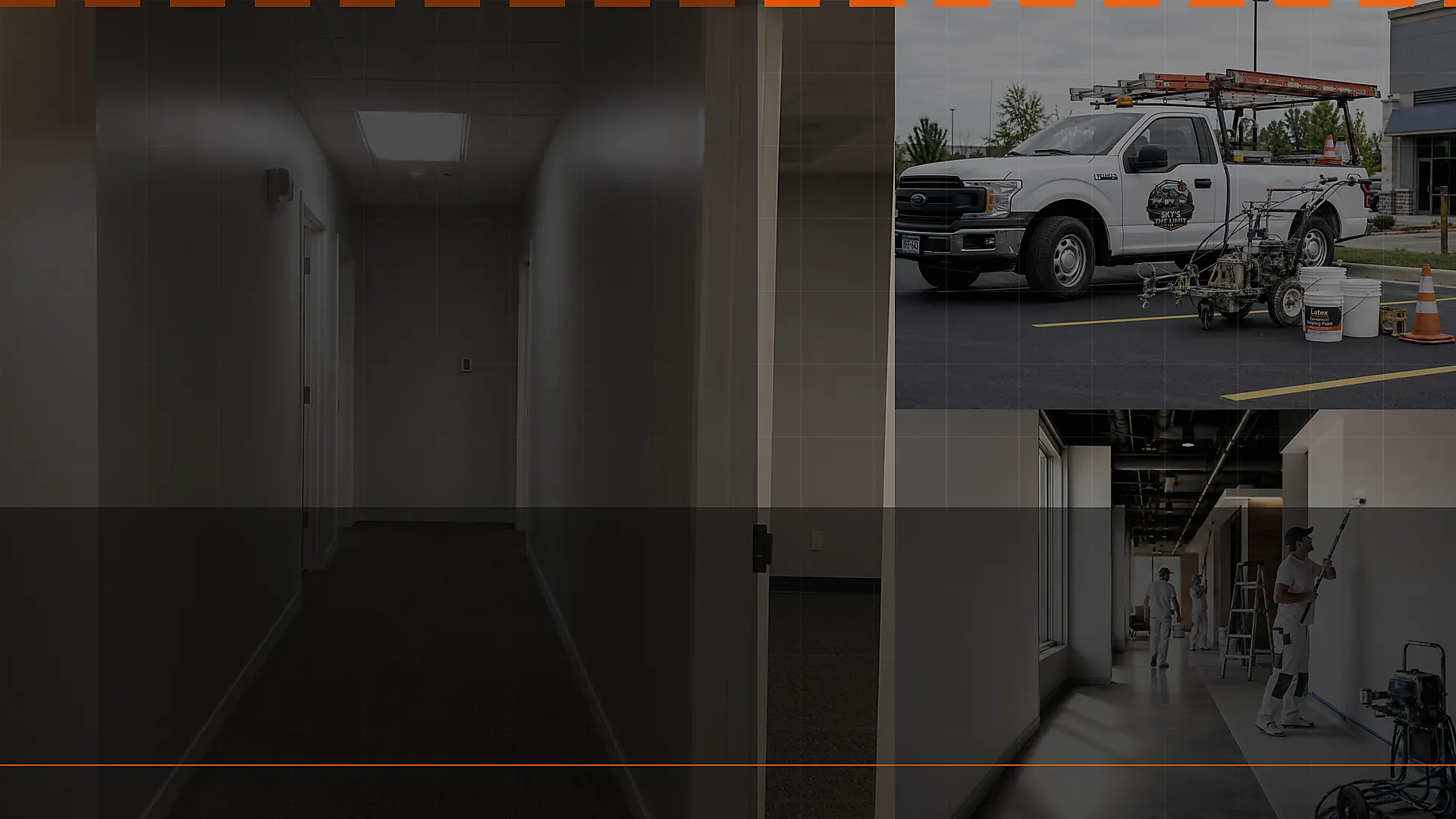
Field record
Real surfaces. Written preparation. Owner-led review.
Vetting checklist for Twin Cities commercial painting
What to ask, what to require, what to walk away from
Applies to offices, retail, multi-tenant, and restaurants
No sales pitch — a buyer’s checklist
Price the real surfaces, not a generic package.
Choosing a commercial painter in the Twin Cities? The vetting checklist: written scope, insurance and COI, scheduling around operations, phased work, references, and the red flags that should end the conversation.
01
Written scope checklist
02
Insurance and documentation checks
03
Operations-safe scheduling
04
Red-flag screening
05
Bid comparison method
Clear steps before anyone starts painting.
The same owner-led sequence carries the project from scope to closeout.
Step 01
Define the Job
Write down the spaces, the surfaces, the timeline, and your operating hours.
Step 02
Get 2–3 Written Bids
Compare line-itemed scopes, not just bottom-line numbers.
Step 03
Check Insurance and References
Certificate of insurance and calls to two recent commercial clients.
Step 04
Award on Scope
Pick the contractor whose scope and schedule match your operation, not the lowest number.
How to Choose a Commercial Painting Contractor in the Twin Cities
Hiring a commercial painter is a procurement decision, not a decorating one. The wrong contractor costs you tenant complaints, schedule slips, and a repaint in two years; the right one is invisible — the work happens around your operation and the building just looks maintained. This checklist is how you tell them apart before money moves.
Work through it in order: define the job, require a written scope, verify insurance, pin down scheduling, meet the person running the job, check references, and watch for red flags. It applies whether you are hiring us or anyone else — the checklist does not change.
Start With a Written Scope
A real commercial bid is a document, not a number. The written scope should name every space being painted, the surfaces in each space, the prep being done (scrape, patch, prime, caulk — specified, not assumed), the products going on, and the schedule. If the prep is not specified in writing, you are not getting the prep.
The scope should also cover change orders: what happens when the job reveals something behind the walls, and how extras get priced and approved. A contractor who will not put the scope in writing will not honor it in practice. That is the first and biggest filter.
Verify Insurance and Documentation
Before work starts, require a certificate of insurance and confirm coverage is current — general liability at minimum, plus workers’ compensation coverage for the crew that will be in your building, or a valid documented statutory exemption (for example, an owner-operator exemption under Minnesota Statute 176.041). Ask whether the people on your site are employees or subcontractors, and get the answer in the scope.
This is not adversarial; it is standard commercial procurement. Any established Twin Cities commercial painter produces a COI on request. One that stalls or deflects is telling you something.
Pin Down Scheduling Around Your Operations
The bid means nothing without a schedule that fits your operation. For offices: after hours and weekends, with common areas open during the day. For retail and restaurants: nights and between-services windows, with the site clean and open on time every morning. For multi-tenant: phased work — suite by suite or floor by floor — so occupied spaces stay running.
Get the schedule in writing in the scope: start date, work windows, completion date, and what happens if the contractor slips. Then hold them to it.
Ask Who Actually Runs the Job
Know the name of the person accountable for your building. Who is the crew lead on site day to day? Who is your single point of contact if something is wrong? What happens when a question comes up at 6 a.m. before opening?
“Can’t name the crew lead” is a red flag (see below). The estimator who sells the job is often not the person who shows up — that is fine, as long as the person who shows up has a name and a phone number before work begins.
Check Commercial References — Then Call Them
Ask for two or three recent commercial clients with comparable work: similar building type, similar schedule constraints. Then call them and ask the questions that matter — did the crew show up when they said, did the schedule hold, how was the site left every day, would you hire them again for the next building?
Glossy project photos prove a contractor can paint. References prove a contractor can run a job. They are different skills.
Red Flags That Should End the Conversation
Some bids disqualify themselves. No written quote — just a number on a napkin or a verbal “we’ll take care of it.” A demand for a large deposit before work starts; standard commercial work runs on reasonable progress terms, not big money up front. Can’t name the crew lead. Can’t produce a certificate of insurance. A vague or shifting timeline. And a price far below every other bid with no explanation — that is not a deal, it is a scope that will grow once your building is torn apart.
One red flag ends the conversation. You do not need to debate it.
Comparing Bids Fairly — and What To Bring to the Walkthrough
Lay the bids side by side and compare scope to scope: same spaces, same prep, same products, same schedule windows. The lowest number usually means the thinnest scope — and the “savings” come back as change orders. Award on the scope and the schedule, not the number alone.
When you are ready to get bids, bring the walkthrough the facts it needs: the spaces and surfaces, your operating hours, the timeline you are working against, and any constraints (tenant communication, GC sequencing, building rules). The better the contractor understands your operation, the better the quote. Start with a free estimate and see how the walkthrough goes.
Asked before every project like this.
- Should I get multiple bids for a commercial painting job?
- Yes — two or three, all in writing. Compare scope to scope: spaces, prep, products, schedule. The lowest number usually means the thinnest scope.
- Is a large deposit normal for commercial painting?
- No. A large deposit demanded before work starts is a red flag. Standard commercial work runs on reasonable progress terms agreed in the written scope.
- Can commercial painting happen during business hours?
- It can, but it should not have to — most offices, retail, and restaurant work is scheduled after hours or in phases. If a contractor insists on painting through your operating hours, question the plan.
- What is the difference between a commercial and a residential painter?
- Scheduling and accountability: after-hours windows, phased work across occupied spaces, written scopes with schedule dates, insurance documentation, and coordination with property managers or GCs.
- Do I need a written contract, or is a written quote enough?
- A written, line-itemed quote with the schedule in it covers most commercial repaints — spaces, prep, products, schedule, and change-order terms. Bigger jobs get a formal contract. Verbal agreements cover nothing.
Send the surface story once.
Photos, location, timeline, and access constraints give the first response enough context to be useful.
Photo evidence
Add a public Google Drive, iCloud, Dropbox, or album link.
Correct service lane
This request enters the commercial estimate path.
Structured next step
Anthony receives the project facts instead of a vague callback request.
Choosing a Commercial Painter project details.
Share the project conditions first. Contact details come after the useful scope information.