Parking Lot Striping
Parking lot striping for clearer traffic flow, cleaner presentation, and stronger property arrival.
- Layout and visibility focus
- Commercial property presentation
- Public-facing surface readiness
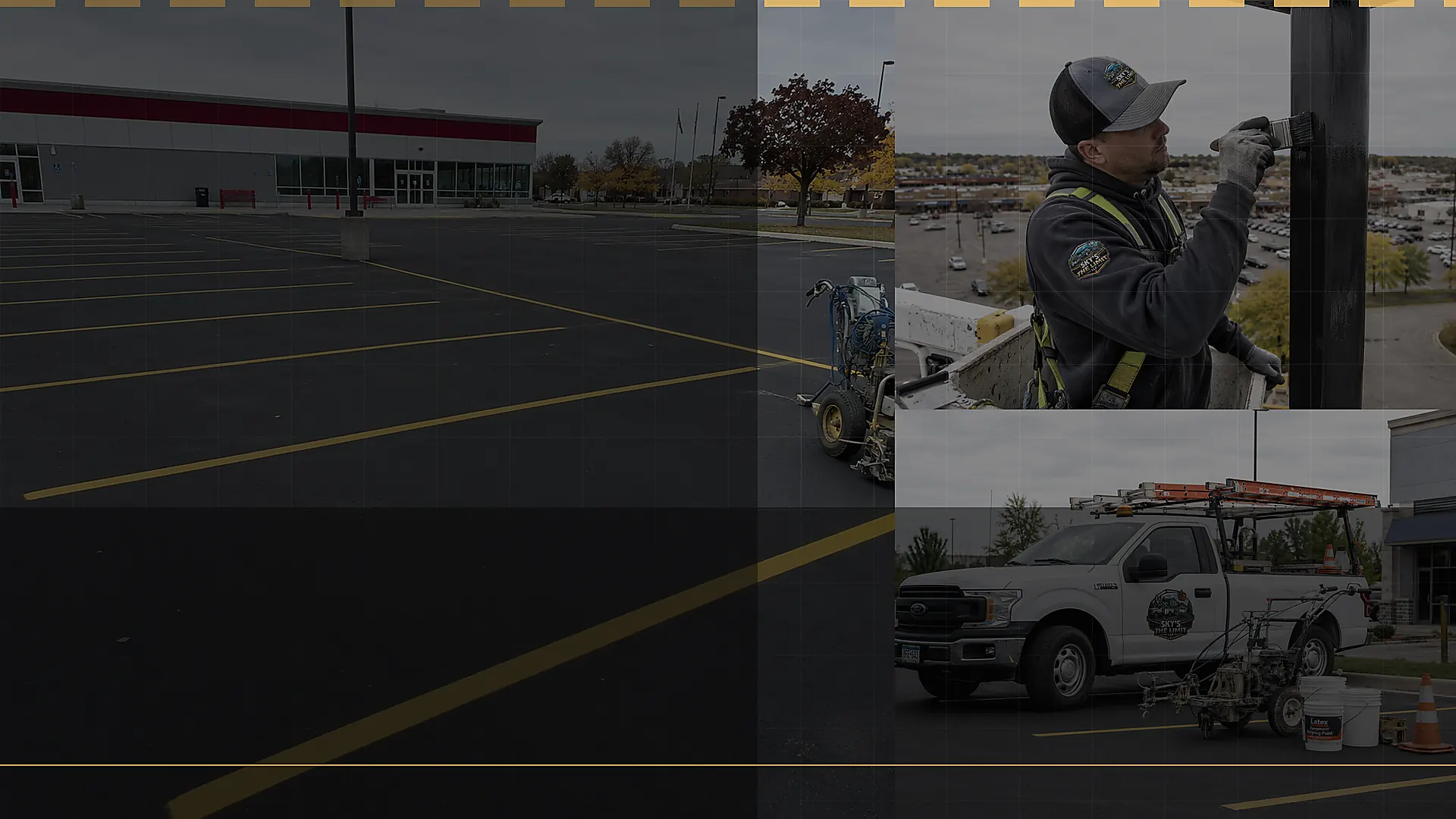
Field record
Real surfaces. Written preparation. Owner-led review.
Layout and visibility focus
Commercial property presentation
Public-facing surface readiness
Price the real surfaces, not a generic package.
Parking lot striping inquiries for small lots, commercial properties, facilities, and public-facing spaces that need clearer markings.
01
Parking stall lines
02
Directional markings
03
Small-lot refreshes
04
Facility lots
05
Property arrival improvements
Clear steps before anyone starts painting.
The same owner-led sequence carries the project from scope to closeout.
Step 01
Assess The Lot
Review existing markings, pavement condition, traffic flow, and layout needs.
Step 02
Prepare The Surface
Plan cleaning, debris removal, chalk lines, and access timing.
Step 03
Stripe For Clarity
Focus on visibility, flow, property presentation, and closeout photos.
Parking Lot Striping Services in the Minneapolis–St. Paul Metro
We stripe parking lots across the Minneapolis–St. Paul metro: new layouts chalked from your site plan, re-stripes of faded lots, and stencils for arrows, stop bars, crosswalks, fire lanes, and numbered stalls. Small lots, commercial properties, and facilities — the job is scoped on a walkthrough, measured, and quoted in writing.
Crisp lines do two jobs at once: they tell drivers where to go and they tell customers the property is looked after. We lay out for both — clear traffic flow and a clean arrival.
Restriping: When Faded Lines Need a Refresh
Restriping is the same layout, painted fresh — same stalls, same flow, new crisp lines. It is the right call when the layout still works and only the paint has failed: lines worn to half their visibility, plow-scraped symbols, faded stall edges.
In Minnesota the refresh rhythm is seasonal. Winter does the damage — plows, salt, freeze-thaw — and spring is when it shows. A walkthrough each spring tells you whether this is a refresh year or whether the layout itself needs rework first.
Line Striping for St. Paul and the East Metro
St. Paul and the east metro — Woodbury, Maplewood, Oakdale, South St. Paul, Inver Grove Heights — get the same full operation as the west side: re-stripes, ADA stall and aisle layouts, fire lanes, arrows, and crosswalks, scheduled around the property’s traffic.
If you manage lots in more than one east-metro city, one walkthrough can scope all of them and one schedule can cover the work.
What We Stripe: Stalls, Aisles, Arrows, Stencils, and Fire Lanes
Standard and compact stalls, angled and 90-degree layouts, directional arrows, stop bars, crosswalks, loading zones, numbered and reserved stalls, bike lanes — and fire lane markings. Fire lanes follow your local fire marshal’s rules; we chalk what the authority requires.
ADA stalls and access aisles get their own treatment — that work is covered in detail on our ADA and pavement-marking pages.
How a Restriping Job Runs: Quote to Done
One, we walk the lot: existing markings, pavement condition, traffic flow, layout needs. Two, surface prep: sweep, clean, and remove or black out old marks where the layout is changing. Three, we chalk the layout. Four, the striping machine puts down the lines. Five, stencil details — arrows, stop bars, symbols. Six, cure time before traffic returns.
Your written quote includes the schedule. We work around your lot’s low-traffic hours so the job does not shut the property down.
Winter-Proofing: Why Minnesota Lots Fade Faster
Plow blades scrape flat-painted symbols first. Salt and sand grind the lines all winter. Snow-storage piles drag gravel across paint for months. Freeze-thaw opens the pavement under the lines. That is why Twin Cities lots fade faster than the paint’s rating suggests — and why spring is the season to look at them.
Plan a walkthrough each spring. Catching fade early is a re-stripe; catching it late is a full re-mark.
Striping Costs in the Twin Cities
Every lot prices differently — stall count, layout complexity, and how much old marking needs rework all move the number. Request a free estimate and we will measure the lot and give you a written number before any work starts.
Asked before every project like this.
- How often should a parking lot be restriped in Minnesota?
- Most Twin Cities lots need restriping every 2–4 years, depending on traffic and plow exposure. Lots that see heavy winter plowing fade fastest — plan a walk-through each spring.
- Can you stripe over old, faded lines?
- Usually yes. If the old paint is still visible enough to follow, we re-chalk the layout and spray fresh lines. If the layout is changing or the old markings conflict, we remove or black them out first.
- How long does a restriping job take?
- Your written quote includes the schedule. We work around your lot’s low-traffic hours — evenings and weekends where access allows — so the job does not shut the property down.
- Can you work around our business hours?
- Yes. Tell us your low-traffic windows at the walkthrough and we build the schedule around them, in writing.
- What is the difference between striping and sealcoating?
- Sealcoating protects the asphalt surface; striping paints the lines on top. Sealcoat first, let it cure, then stripe — never the reverse.
Send the surface story once.
Photos, location, timeline, and access constraints give the first response enough context to be useful.
Photo evidence
Add a public Google Drive, iCloud, Dropbox, or album link.
Correct service lane
This request enters the public sector estimate path.
Structured next step
Anthony receives the project facts instead of a vague callback request.
Parking Lot Striping project details.
Share the project conditions first. Contact details come after the useful scope information.
